

Every child has the right to play, move, and enjoy the benefits of sport. Yet for many children and young people with physical and motor disabilities, participating in regular sports activities is still far from easy. Physical barriers, lack of adapted opportunities, limited awareness, and social stereotypes often prevent them from experiencing the many benefits that an active lifestyle can offer.
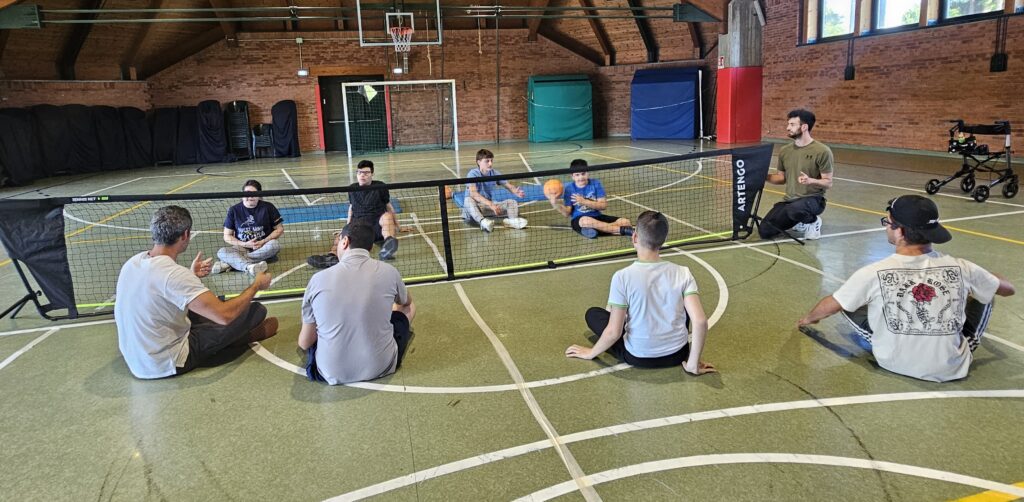
With the “SWAP – Sitting Volleyball to Improve Health and Foster Social Wellbeing of Children and Youth with Physical and Motor Disabilities” project, over the next two years, we will promote sitting volleyball as an accessible and inclusive sport, while providing scientific evidence, training opportunities, and practical resources for healthcare professionals, coaches, teachers, families, and sports organisations.
Sport is often associated with improving strength, balance, coordination,and physical fitness. While these are important benefits, its impact goes much further.
Regular physical activity helps children develop independence, confidence, and essential life skills. It provides opportunities to solve problems, set personal goals, communicate with others, and experience success in a supportive environment. For children with physical and motor disabilities, these experiences can play an important role in personal growth and overall wellbeing.
Sport also creates opportunities to meet new people and become part of a team. Sharing training sessions, celebrating achievements, and supporting teammates help children build friendships and develop a sense of belonging.
For many young people with disabilities, inclusive sports programmes can reduce feelings of isolation and encourage active participation in school and community life. They also help challenge stereotypes by showing that disability is not a barrier to enjoying sport and working towards common goals.
The positive effects of sport often extend into everyday life. Children who regularly participate in physical activity frequently report greater self-confidence, improved emotional wellbeing, and increased motivation to take part in other social and educational activities.
Although awareness is growing, many children with disabilities still face obstacles when trying to access sport. Accessible facilities, trained coaches, adapted activities, and supportive environments all make a difference.
Creating inclusive sports opportunities requires collaboration between healthcare professionals, schools, sports clubs, families, and local communities. By working together, it becomes possible to ensure that every child has the opportunity to experience the physical, social, and emotional benefits of an active lifestyle.
At SWAP, we believe that sport should be accessible to everyone. Throughout the project, we will explore how sitting volleyball can support rehabilitation, health, inclusion, and wellbeing for children and young people with physical and motor disabilities.
By combining scientific research with practical resources and training, SWAP aims to help professionals and organisations create more inclusive sporting opportunities across Europe.
Sources
World Health Organization (WHO). Guidelines on Physical Activity and Sedentary Behaviour. (2020). https://www.who.int/publications/i/item/9789240015128
World Health Organization (WHO). Global Report on Health Equity for Persons with Disabilities. (2022). https://www.who.int/publications/i/item/9789240063600
United Nations. Convention on the Rights of Persons with Disabilities (Article 30 – Participation in cultural life, recreation, leisure and sport). https://www.ohchr.org/en/instruments-mechanisms/instruments/convention-rights-persons-disabilities
UNESCO. Quality Physical Education (QPE): Guidelines for Policy-Makers. (2015). https://unesdoc.unesco.org/ark:/48223/pf0000231101
International Paralympic Committee. PARA SPORT FOR DEVELOPMENT. https://www.paralympic.org/impact/para-sport-development